



First Court Judgment Assisted by ChatGPT
Artificial intelligence entered courtroom headlines worldwide when a Colombian magistrate openly acknowledged using OpenAI’s ChatGPT while preparing a ruling—sparking intense debate across the legal profession over efficiency, judicial responsibility, and transparency.
What Happened in the Cartagena Courtroom
On January 30, 2023, Judge Juan Manuel Padilla of the First Circuit Labor Court in Cartagena ruled on a sensitive constitutional protection petition (tutela) concerning whether a child diagnosed with autism spectrum disorder had the right to full health insurance coverage for therapy, medical appointments, and transportation costs without co-payment barriers.
While preparing the decision, Judge Padilla asked ChatGPT targeted legal questions regarding precedent and statutory exemptions for minors with autism—including the prompt: “Is an autistic minor exempt from paying fees for their therapies?”—and incorporated portions of the AI-generated summary alongside established Colombian Constitutional Court jurisprudence in the final written text.

Efficiency vs. Judicial Accountability
Judge Padilla defended his approach not as delegating judgment to a machine, but as using modern technology to draft preliminary text faster and focus judicial attention on analyzing evidence and legal arguments. Colombian legislation passed in 2022 expressly encourages the digital transformation of judicial administration.
At the same time, legal scholars and senior judges urged strict caution. Colombian Supreme Court Justice Octavio Augusto Tejeiro emphasized that AI tools can support administrative research, yet every factual premise, statutory citation, and binding precedent must be independently verified by a human jurist. Large language models can produce plausible-sounding yet fabricated citations—known as hallucinations—making unverified copy-pasting unacceptable in legal practice.
What This Means for Everyday Law Firms
Whether a practice handles litigation, corporate advisory, or high-volume regulatory filings, generative AI delivers real value only when three conditions are met:
- Structured Case Context First: AI cannot summarize deadlines, compare submissions, or draft client updates if files sit scattered across personal inboxes and unindexed folders. Centralizing documents inside Legalistik Documents builds the clean foundation AI needs.
- Domain-Aware Legal Workflows: Combining verified matter history with tools such as the Court Deadline Calculator eliminates guesswork on procedural timing before drafting begins.
- Human Verification & Confidentiality: Sensitive client facts must stay protected inside encrypted practice systems rather than pasted carelessly into unvetted public tools, with attorneys always holding final sign-off.
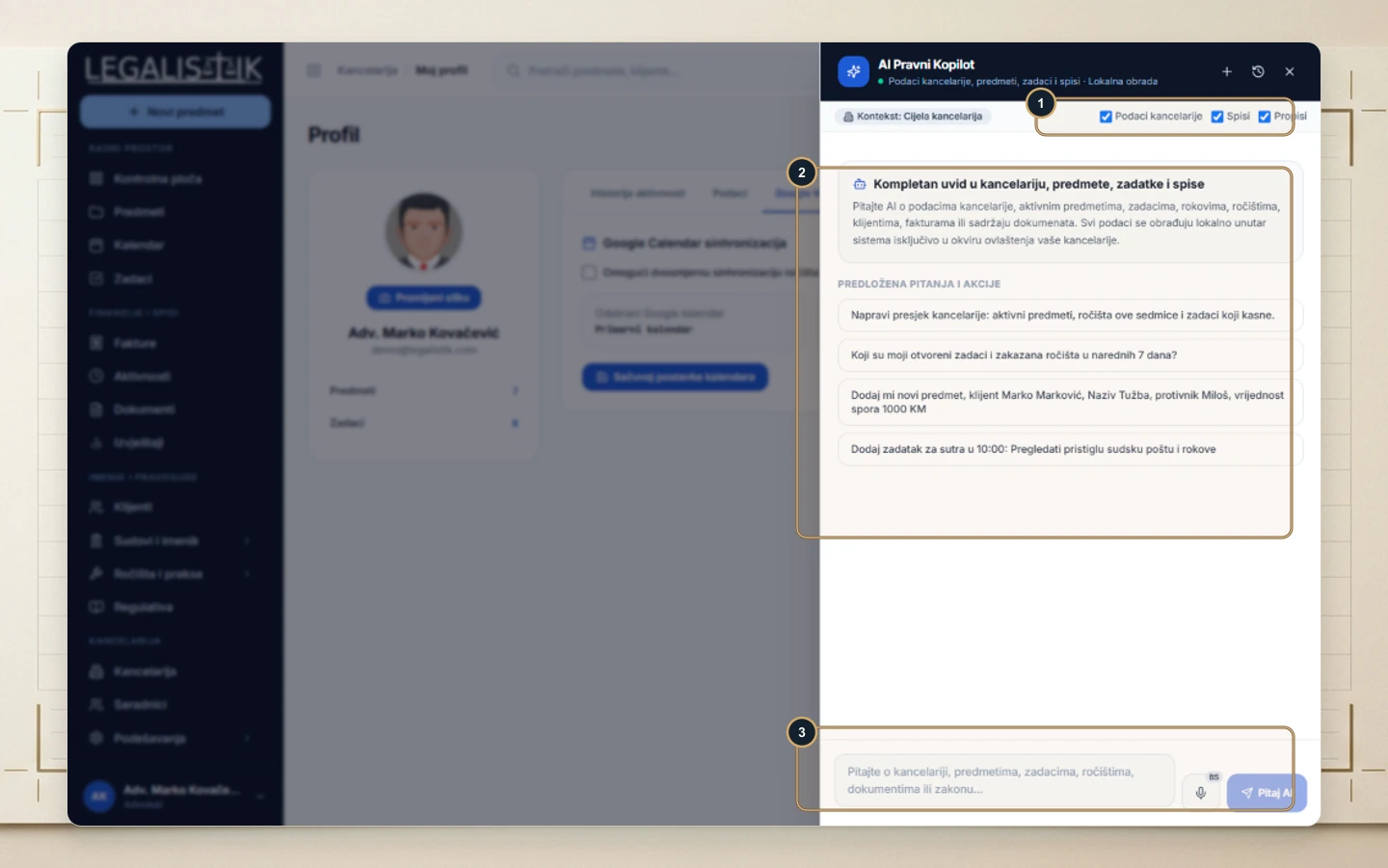
Curious how modern law offices combine structured case records with practical AI assistance? Explore our Legalistik AI Copilot insights, view pricing plans, or schedule a live demo to see Legalistik in action.